


Key Takeaways
- Start early. Give yourself two to three months so nothing feels rushed.
- Nail the basics first. Solid obedience makes everything else easier.
- Use slow exposure. Introduce baby sounds and smells little by little.
- Change the routine gradually, so your dog never blames the baby.
- Stay calm at the first meeting and always supervise.
- Keep loving your dog. A little daily attention keeps your bond strong.
- Get professional help if you spot aggression or serious anxiety.
When we brought our first child home, our Labrador, Max, met us at the door wagging his whole body. Then he caught the scent of the baby, froze, and gave us this look like, “Wait… what is that?” That moment taught me something every soon-to-be parent should know: bringing a baby home changes your dog’s world just as much as it changes yours.
Your pup has been the star of the show for years. Now there’s a tiny human who cries at odd hours, smells strange, and steals all your attention. If you don’t prepare your dog ahead of time, stress can pile up fast for everyone. But here’s the good news: dogs are smart, and they adapt well. With some planning and patient re-training, your dog and your baby can become great companions. This guide breaks it all down, step by step, in plain language. No confusing dog-trainer talk.
Quick Re-Training Timeline at a Glance:
| Timeframe Before Due Date | What to Focus On |
|---|---|
| 2–3 months before | Brush up on basic obedience (sit, stay, leave it, go to spot) |
| 6–8 weeks before | Start playing baby sounds; introduce baby smells |
| 4–6 weeks before | Set up baby gear; begin shifting routines and boundaries |
| 2–4 weeks before | Practice calm behavior with a baby doll |
| Homecoming day | Tire the dog out, keep the first meeting calm and supervised |
| After baby arrives | Keep one-on-one time, supervise always, watch for stress signs |
Why Re-Training Your Dog Matters Before Baby Arrives
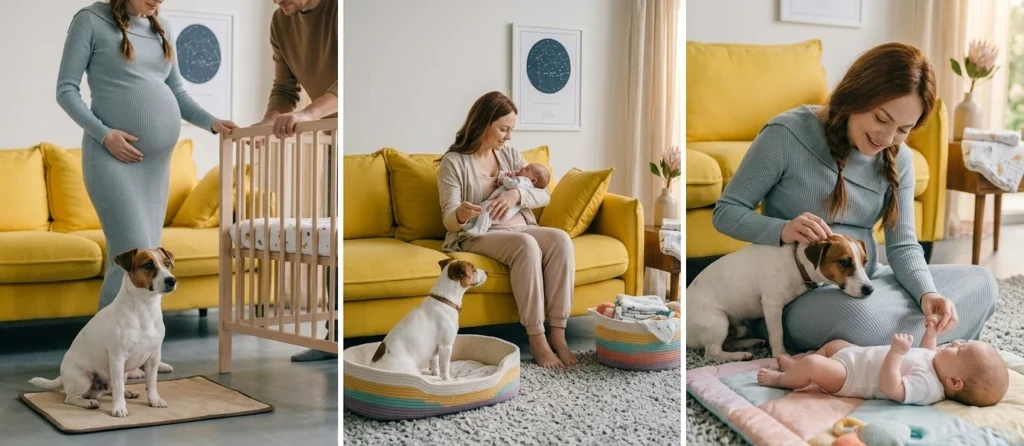
A new baby flips your dog’s daily life upside down. Picture it from their side. The routine shifts. The house fills with strange smells and gear. You and your partner seem busy and tired all the time. For a dog, that’s a lot to handle out of nowhere.
Starting early gives your dog a real advantage:
- It lowers stress and anxiety. A prepared dog stays calmer. When your pup knows what’s coming, the baby’s arrival feels less like a shock.
- It keeps everyone safe. Even the gentlest dog can react poorly if it feels scared or ignored. Training builds good habits before the chaos hits.
- It protects your bond. You don’t want your dog to feel pushed aside. Re-training keeps your pup feeling loved and part of the family.
The American Veterinary Medical Association recommends starting these preparations well before your due date. From my own experience, two to three months is the sweet spot. It’s enough time to teach new skills without rushing.
Start With the Basics: Brush Up on Obedience
Before anything baby-related, make sure the core commands are rock solid. These saved me again and again once our baby was home.
Focus on these key skills:
- Sit and stay. You’ll lean on these constantly, like keeping your dog settled while you change a diaper.
- Leave it. This one’s pure gold. It teaches your dog to back off from pacifiers, baby toys, or dropped snacks. Trust me, you’ll use it daily.
- Go to your spot. Pick a mat or bed and teach your dog to head there on cue. It gives your pup a calm place to chill when things get hectic.
- Walking nicely on a leash. Soon you’ll be steering a stroller with one hand. A dog that pulls turns every walk into a wrestling match.
Keep sessions short and fun. Five to ten minutes a day beats one long, boring session. Use treats and praise, and always finish on a win. If your dog already knows these, just practice so they stay sharp.
Get Your Dog Used to Baby Sounds and Smells
Babies bring a flood of new noises and scents. Dogs experience the world mostly through their nose and ears, so this step really counts.
Here’s how to prep their senses:
- Play baby sounds. Find recordings of babies crying, cooing, and giggling online. Start soft, then slowly raise the volume over a few weeks. Hand out a treat while the sounds play so your dog links baby noise with good things.
- Introduce baby smells. Start using baby lotion, powder, and shampoo on yourself before the baby comes. Let your dog sniff these scents so they’re familiar later.
- Bring home a baby blanket. Have someone bring a blanket or piece of clothing that smells like the baby from the hospital first. Let your dog sniff it. This little trick worked wonders for us, Max had already “met” the baby by smell before they ever came face to face.
This slow, gentle approach is called desensitization. It just means helping your dog get comfy with new things bit by bit, so nothing feels scary.
Change the Routine Slowly, Not All at Once
One of the biggest mistakes new parents make is flipping everything the second the baby arrives. Dogs notice sudden change, and it can leave them feeling shut out.
Ease into the new normal weeks ahead:
- Adjust walk and feeding times. If your schedule will shift later, start shifting it now. A dog used to a 7 a.m. walk won’t get why it suddenly stopped.
- Set new boundaries early. If the nursery will be off-limits or need permission, teach that rule now. Don’t wait until the baby’s sleeping in there.
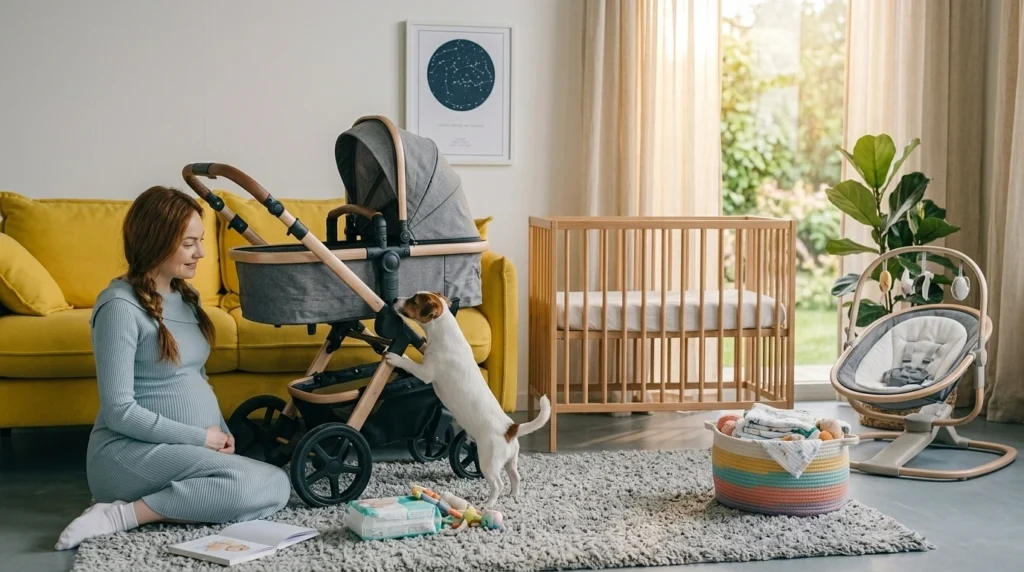
- Get the gear out early. Set up the crib, swing, and stroller a few weeks before your due date. Let your dog explore them while they’re empty. By the time the baby uses them, they’re old news.
When change comes gradually, your dog ties it to normal life, not to the baby. That’s huge, because you never want your pup to blame the baby for losing your attention.
Teach Your Dog How to Be Gentle and Calm
A baby is fragile, and even a happy, bouncy dog can knock things over by accident. Teaching calm behavior now pays off big later.
Try these gentle-behavior tips:
- Reward calm, not hyper. When your dog lies quietly nearby, offer praise or a treat. This teaches them that staying mellow earns rewards.
- Discourage jumping. A dog jumping on you while you hold a baby is a real risk. Practice keeping all four paws on the floor during greetings.
- Practice with a baby doll. Yes, it feels ridiculous. I carried a doll around our living room for weeks and felt silly every time. But it works. Rock it, pretend to feed it, and reward your dog for staying calm. It’s a low-pressure rehearsal for the real thing.
The whole point is showing your dog that quiet, gentle behavior around the “baby” leads to good stuff.
The First Introduction: Doing It Right
The big day arrives, and so does the first meeting between dog and baby. This moment sets the tone, so handle it with care.
Follow these steps for a smooth first meeting:
- Tire your dog out first. A long walk or play session beforehand helps a lot. A tired dog is a calmer dog.
- Let Mom greet the dog alone first. After days at the hospital, your pup will be thrilled to see Mom. Give them a happy reunion before the baby enters, ideally with someone else holding the baby.
- Keep it low-key. Stay relaxed. Dogs read your energy. If you’re tense, your dog will be too.
- Let your dog sniff from a safe distance. Allow a gentle sniff while you hold the baby securely. Reward calm with praise and treats.
- Never force it. If your dog seems nervous, don’t push. Let them come around at their own pace.
Always supervise. No matter how much you trust your dog, never leave them alone with your baby. The American Academy of Pediatrics is clear on this, adult supervision around dogs and infants should be constant.
Keep Your Dog Feeling Loved
Here’s a truth a lot of people skip: your dog still needs you. With a newborn eating up nearly every minute, it’s easy to let your dog slide down the list. But a neglected dog can get anxious or start acting out. This was my hardest lesson, in those first exhausting weeks, I almost forgot poor Max needed me too.
Make your dog feel included with these simple habits:
- Carve out one-on-one time. Even ten minutes of focused attention a day makes a difference. A short walk or quick game of fetch keeps your bond strong.
- Include your dog in baby time. Let your pup join stroller walks or sit calmly nearby during feedings. It helps them feel like part of the team.
- Don’t punish curiosity. It’s natural for your dog to be curious about the baby. Gently guide them instead of scolding, so they don’t link the baby with bad feelings.
When to Call in a Professional
Most dogs adjust just fine with patience and time. But sometimes you need extra help, and that’s perfectly okay.
Reach out to a trainer or your vet if you notice:
- Growling, snapping, or stiff body language around the baby.
- Signs of serious anxiety, like hiding, shaking, refusing to eat, or destroying things.
- Aggression that doesn’t improve even after weeks of training.
A certified dog trainer or a veterinary behaviorist can build a plan just for your dog. There’s no shame in asking for help. Honestly, it’s one of the most responsible moves you can make for your family.