


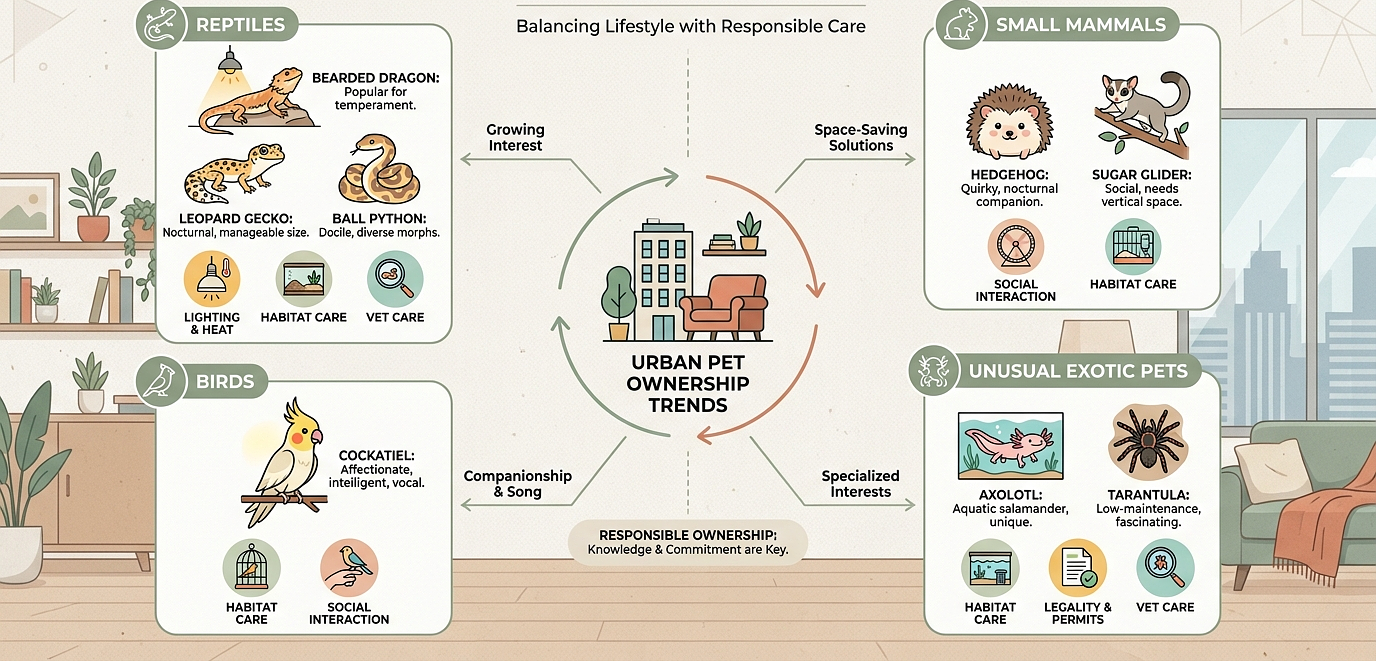
Exotic pets have come a long way from being a quirky hobby for a handful of enthusiasts. These days, you’ll find them in apartments, family homes, and even college dorms, sharing space with people who wanted something a little different from the usual cat or dog. Whether it’s a bearded dragon soaking up warmth under a basking lamp or a tiny hedgehog curled up in a fleece pouch, exotic animals have carved out a real place in modern households.
Why People Are Choosing Exotic Pets
There’s a practical side to this trend that often gets overlooked. A lot of exotic animals do really well in small living spaces, which matters when rent is high and yards are rare. They tend to be quieter than dogs, less demanding than you’d expect, and frankly, they’re interesting in a way traditional pets sometimes aren’t. Social media has helped too. Once people started seeing videos of geckos eating mealworms or sugar gliders gliding across living rooms, curiosity turned into actual ownership for a lot of folks.
Reptiles Are Running the Show
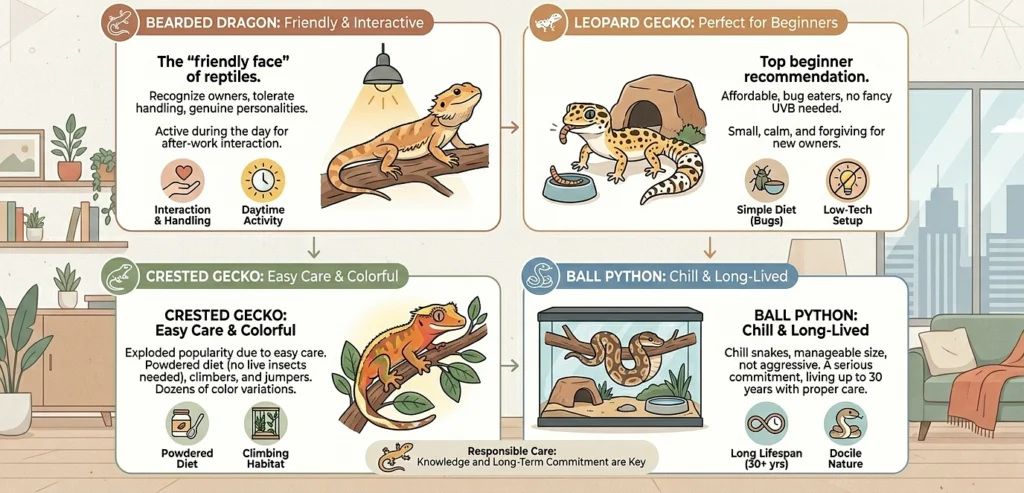
When it comes to exotic pets, reptiles are the heavyweights. Four species in particular keep showing up at the top of every list.
- Bearded dragons: are kind of the friendly face of the reptile world. They actually seem to recognize their owners, they tolerate handling really well, and a lot of keepers swear their beardies have genuine personalities. They’re active during the day, which is a big plus if you want a pet you can actually interact with after work.
- Leopard geckos: are usually the first reptile people recommend to beginners, and for good reason. They’re affordable, they eat bugs, and they don’t need the fancy UVB lighting setup that trips up new owners with other lizards. They’re small, they’re calm, and they’re forgiving when you’re still learning the ropes.
- Crested geckos: have exploded in popularity because they’re gorgeous and surprisingly easy to care for. You can feed them a powdered diet mixed with water, which means no live insects if that’s not your thing. They climb, they jump, and they come in dozens of color variations that collectors love.
- Ball pythons: stay popular year after year because they’re just chill snakes. They top out at a manageable size, they’re not aggressive, and they can live with you for thirty years if you take care of them properly. That’s a serious commitment, but a rewarding one.
Small Mammals That Win Hearts
Hedgehogs are adorable but nocturnal, so be ready for them to do most of their exploring at night. Sugar gliders are sweet little marsupials that bond hard with their humans, but they really need to live in pairs or small groups to stay mentally healthy. Ferrets are pure chaos in the best way, full of energy and very affectionate. Chinchillas have the softest fur you’ll ever touch and can live fifteen to twenty years with good care. There are also some less common hamster breeds like Djungarian and Roborovski hamsters that appeal to people who want something a bit different from the standard pet store offerings.
Birds for People Who Want Conversation
Birds are a whole different commitment, but they bring something no other pet can. Cockatiels are probably the easiest starting point, friendly little birds that whistle and sometimes pick up a few words. Larger parrots like African greys and conures are incredibly smart, but they’re also loud and they can outlive you, so think carefully. Finches are a great middle ground if you’d rather watch and listen than handle, since they’re happy living their own lives in a well-set-up cage.
The Unusual and the Unexpected
Some people want something truly off the beaten path, and there’s plenty to choose from. Brazilian short-tailed opossums are quiet, clean, and independent. Axolotls are those weird-looking aquatic salamanders with the feathery gills that have basically become internet celebrities at this point. And for invertebrate fans, tarantulas and scorpions are surprisingly low-maintenance pets that don’t need much space, just the right setup and a little patience.
What These Pets Have in Common
Across the board, the most popular exotics share a few traits. The beginner-friendly ones like leopard geckos and corn snakes don’t ask much, just regular feeding and a proper enclosure. A lot of reptiles are genuinely intelligent, with tegus and monitor lizards showing problem-solving skills that rival some mammals. And plenty of these animals are more interactive than people assume. Sugar gliders and bearded dragons especially can become really social when you handle them often from a young age.
What You Really Need to Think About First

Owning an exotic pet isn’t like grabbing a goldfish. There are a few things you absolutely need to consider.
- Vet care is the big one. Not every veterinarian knows how to treat a reptile or a sugar glider, and finding a specialist can mean driving an hour or paying a premium. Make sure you have one nearby before you commit.
- Legal stuff matters too. Hedgehogs are illegal in some US states, ferrets are banned in others, and certain reptiles can’t be kept in specific countries. Check your local laws first because returning an animal isn’t as simple as taking it back to the store.
And then there’s the habitat. Reptiles need specific temperatures and lighting. Axolotls need cold, clean water. Parrots need space and toys to keep their minds working. Skipping these requirements isn’t just inconvenient for the animal, it’s genuinely harmful. So go in prepared, do your research, and pick the pet that fits your actual life rather than the one that looks coolest on Instagram.