


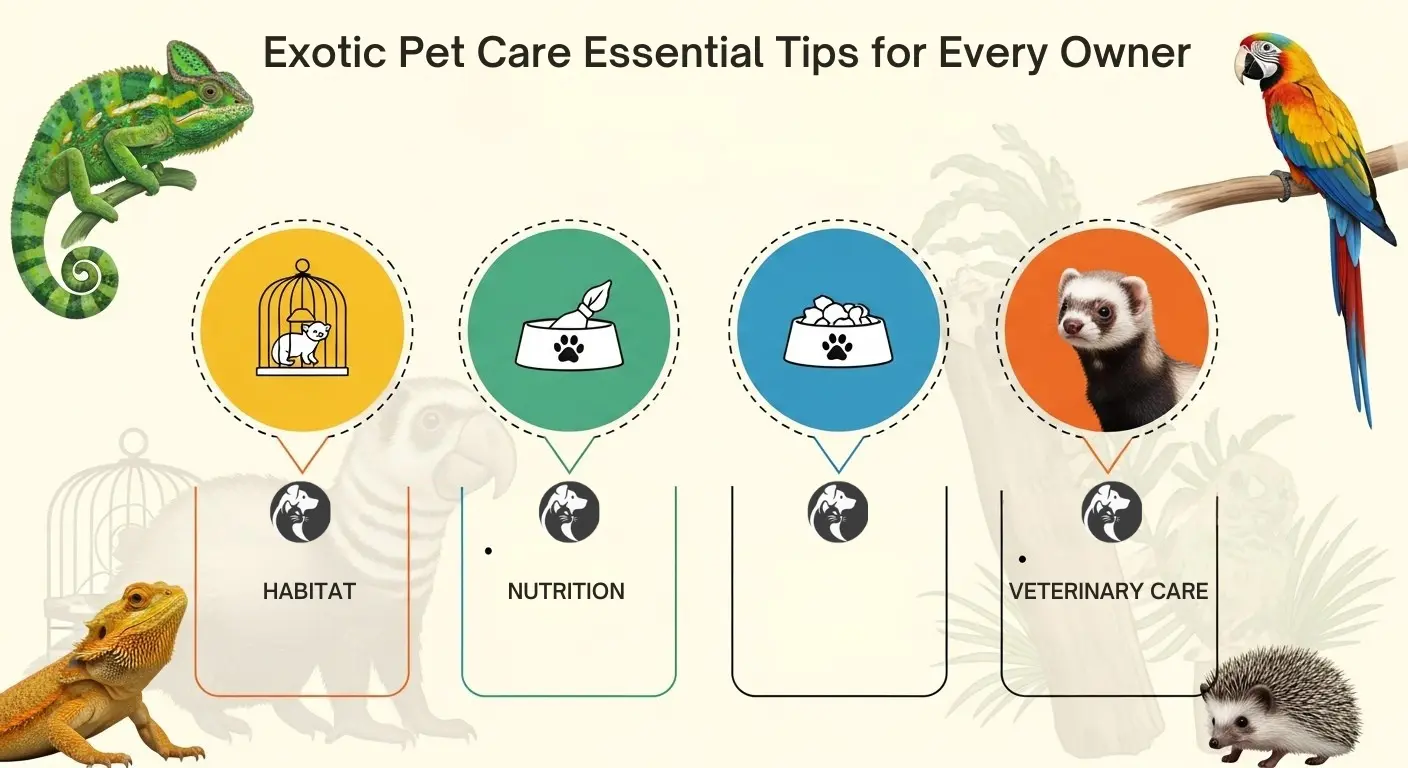
Exotic pets are becoming increasingly popular, and it’s easy to see why. From fluffy sugar gliders to colorful chameleons, these extraordinary creatures captivate hearts with their unique looks and quirky behaviors. However, caring for an exotic pet requires specialized knowledge and attention. In this blog post, we’ll explore the essential tips for every owner to ensure your exotic friend thrives.
| Pet Type | Diet | Habitat | Health Check |
| Sugar Gliders | Fruits, veggies, protein | Large cage, social interaction | Regular check-ups, monitor sugar levels |
| Chameleons | Live insects, leafy greens | Well-ventilated terrarium, UVB light | Monitor temperature, humidity, and color changes |
| Hedgehogs | High-protein diet, fruits, veggies | Spacious enclosure, hiding places | Regular nail trimming, check for quill loss |
Understanding Your Exotic Pet’s Needs
Exotic pets have unique requirements that differ significantly from traditional pets. Research your pet’s specific needs, and consult with a veterinarian experienced in exotic pet care.
- Diet and Nutrition
- Provide a balanced diet tailored to your pet’s species.
- Fresh water and a varied diet are crucial.
- Habitat and Environment
- Create a spacious enclosure that mimics your pet’s natural habitat.
- Maintain proper temperature, humidity, and lighting.
Caring for Specific Exotic Pets
Sugar Gliders The Nocturnal Natives:
- Diet: Offer a mix of fruits, veggies, and protein-rich foods.
- Social Interaction: Spend quality time with your sugar glider; they’re extremely social creatures.
- Monitor sugar levels to prevent obesity.
- Provide plenty of toys and climbing structures.
Chameleons The Colorful Climbers:
- Diet: Feed live insects and leafy greens.
- Habitat: Create a well-ventilated terrarium with branches and UVB light.
- Monitor temperature and humidity levels.
- Observe color changes to detect stress or illness.
Hedgehogs The Prickly Friends:
- Diet: Offer high-protein foods, fruits, and veggies.
- Habitat: Provide a spacious enclosure with hiding places.
- Regular nail trimming prevents overgrowth.
- Check for quill loss or skin issues.
Common Mistakes to Avoid
- Inadequate research on specific pet needs
- Poor diet and nutrition
- Insufficient habitat space and enrichment
- Ignoring pet health issues or skipping vet check-ups
Exotic Pet Health Common Issues and Solutions
- Respiratory Problems: Provide proper ventilation and humidity control.
- Nutritional Defects: Offer a balanced diet and consult with a vet.
- Stress and Anxiety: Create a calm environment and provide enrichment activities.
Handling and Socialization Tips
- Get to Know Your Pet: Learn your pet’s behavior and personality.
- Handle with Care: Support your pet’s body and move slowly.
- Socialize Regularly: Spend quality time with your pet daily.
Creating a Pet Friendly Environment
- Pet-Proof Your Home: Remove hazards and toxic substances.
- Provide Enrichment: Offer toys, climbing structures, and hiding places.
- Maintain a Clean Habitat: Clean your pet’s enclosure regularly.
Conclusion
Caring for an exotic pet requires dedication, patience, and knowledge. By following these essential tips, you’ll provide your extraordinary companion with a happy and healthy life. Remember to research your pet’s specific needs and consult with a veterinarian experienced in exotic pet care.